


Data-Led Designs + The Blueprint for a Top-Performing Short-Term Rental
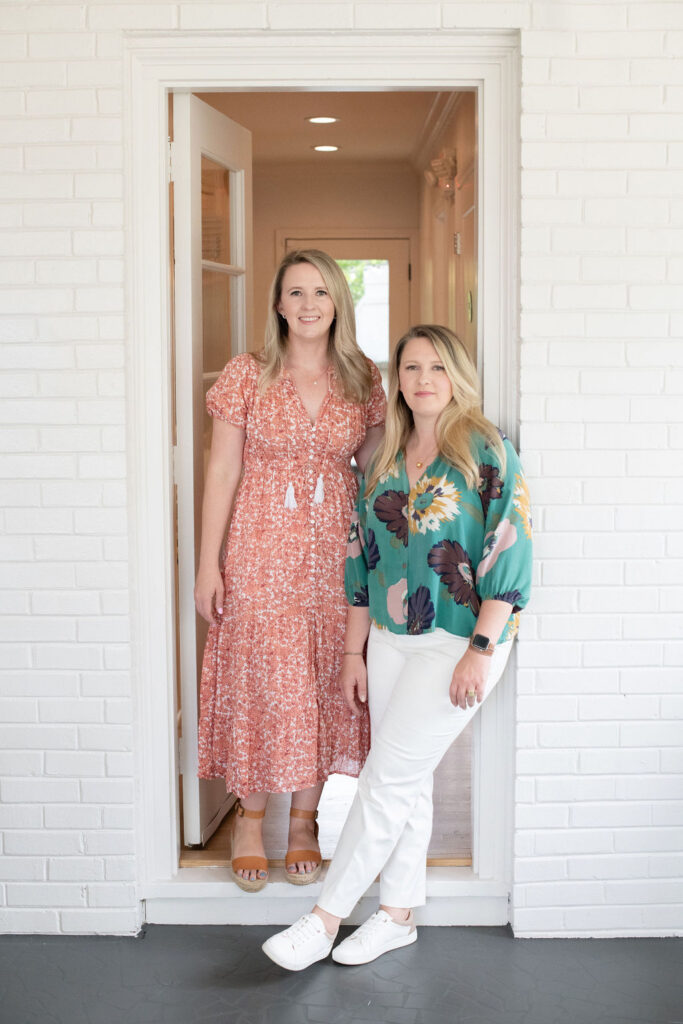
In this episode of the Brand and Market Podcast, I’m joined by Heather and Emily, the co-founders of Data-Led Designs — a company known for creating market insight reports for short-term rental investors, designers, property managers, and real estate professionals.
If you’ve ever wondered:
- Is this market actually investable?
- What amenities are truly worth the money?
- How do I stand out in a “saturated” STR space?
- What does a data-driven short-term rental setup really look like?
This conversation breaks it all down.
Meet Heather + Emily of Data-Led Designs
Heather built Data-Led Designs from a very real gap in the market. Investors had access to plenty of revenue chatter — but not nearly enough insight into what the guest actually wants and what it takes to build a repeatable five-star experience.
With a background in business intelligence (yes, spreadsheets are her natural habitat) and experience as an Airbnb Superhost, Heather approaches STR investing through one clear lens:
If you can’t get the guest stay right, you’re not going to get the five-star review.
Emily joined the business as the marketing mind behind the brand. Before stepping into marketing, she spent nearly a decade as a wedding planner — which, as it turns out, translates beautifully into hospitality.
Both industries are rooted in one thing: taking care of people and creating an experience they’ll remember.
What Is a Market Insight Report?
Data-Led Designs creates market insight reports that help short-term rental owners and investors make smarter decisions before buying — and help current hosts elevate properties they already own.
They work with:
- Individual STR investors
- Interior designers working on vacation rental projects
- Property management groups analyzing entire markets
- Real estate agents guiding clients toward STR-friendly properties
You can download reports for specific cities directly from their website or request a custom report tailored to your target market.
What’s Included in a Data-Led Designs Report?
While each report is market-specific, Heather walks through the core pillars included in every report — and why they matter.
1. Market Performance Snapshot
This section gives you clarity on:
- Travel trends (increasing or decreasing demand)
- ADR (average daily rate)
- Occupancy rates
- Revenue potential
- Performance by bedroom count
Instead of comparing your 2-bedroom to a 6-bedroom property and guessing, you see what’s realistic for your specific buy box.
2. Amenity Strategy + ROI
Amenities aren’t just “nice to have.” They’re revenue drivers.
The report helps answer:
- What amenities are most popular in this market?
- What amenities are oversaturated?
- Where are the gaps you can capitalize on?
- What’s the payback period on specific upgrades?
Heather also shares a powerful rule of thumb:
If 50% or more of the market has an amenity, it becomes a non-negotiable if you want to compete at a higher level.
But differentiation doesn’t always require a massive investment. Sometimes it’s:
- An espresso machine
- Bikes
- A sauna
- A thoughtful experiential upgrade
It all comes back to the guest persona.
3. Guest Persona + Travel Behavior
Not every market attracts the same traveler.
A lake market serves a different guest than an urban market. A one-bedroom property serves a different guest than a five-bedroom family home.
These reports help you get clear on:
- Who is traveling to your market
- Why they’re coming
- What they expect
- How to design and position your property accordingly
Heather and Emily encourage targeting what they call the “aspiring luxury traveler” — someone who travels frequently, values experience, and is willing to pay more for an elevated stay.
4. Pain Points from Guest Reviews
One of the most valuable pieces of the report is the analysis of thousands of guest reviews.
By studying what guests consistently praise — and what they repeatedly complain about — you can avoid preventable mistakes and design a stay that naturally earns five-star reviews.
Do Bigger Properties Always Make More Money?
This is the question almost every investor asks.
Heather confirms that larger properties typically generate more revenue. But the real strategy is maximizing your specific bedroom count.
For one- and two-bedroom properties, success often comes from leaning into:
- Elevated finishes
- High-end kitchens
- Spa-like bathrooms
- Robes and thoughtful details
- Experience-driven features like views, fire pits, or outdoor moments
It’s not about size alone — it’s about positioning.
Quick Wins vs. Premium Positioning
Another key distinction in the episode is the difference between quick wins and premium positioning.
Quick wins are smaller investments with faster payback (typically 6–18 months), based on clear market gaps.
Premium positioning involves bigger upgrades or property-level features that move you into the top tier — things like:
- Prime location
- Water access
- Pools
- Major outdoor features
- View-driven properties
Heather recommends a phased approach when budget is tight: start with what makes you competitive today, then layer in premium additions as revenue grows.
What About Regulations?
Yes — when possible, reports include regulatory guidance.
However, Heather emphasizes that short-term rental regulations change quickly and can vary by township, county, city, or HOA.
Their reports link directly to official sources, but hosts should always verify locally — sometimes even with a direct call to the zoning office.
Can a Report Tell You “Don’t Buy”?
Yes — and sometimes it should.
Heather shares a story about a boutique hotel purchase in Siesta Key, Florida, where the report revealed major revenue drivers were missing — including beachfront access and the ability to add a pool.
It was a tough conversation.
But it likely saved the investor from pouring more money into a property that would struggle to perform.
And sometimes, that’s the real value of data.
From Report to Reality: Real Results in Cary, NC
One of my favorite parts of this episode is seeing theory turn into execution.
Emily used her own market insight report to guide the launch of her short-term rental in Cary, North Carolina.
Originally, she planned to purchase a new-build condo near Downtown Cary Park — a major development that transformed the area.
But when a ranch-style home became available, she pivoted.
Why?
Because the data — combined with long-term vision — showed her the opportunity to build something more differentiated.
The home gave her land.
Flexibility.
The ability to create an experience that couldn’t easily be copied.
And that’s where the strategy came to life.
The Amenity Decisions Were Strategic
Two upgrades became major differentiators.
The Hot Tub
Emily considered installing a cowboy pool — something visually unique.
But guests can filter for a hot tub.
They can’t filter for a cowboy pool.
Choosing the hot tub wasn’t about trend.
It was about searchability and meeting expectations.
It became a strategic revenue driver.
The EV Charger
The EV charger was a relatively small investment.
But when you’re targeting the aspiring luxury traveler — even guests flying in and renting EVs — convenience matters.
At the time, very few rentals in the greater Raleigh/Cary area offered both a hot tub and an EV charger.
That combination immediately narrowed the competitive field.
Not flashy.
Just intentional.
Designing for Experience, Not Just Space
Cary has a long outdoor season, and most rentals weren’t doing much with their backyards.
So Emily invested in:
- A large patio expansion
- A grill island
- A 12-person dining table
- A thoughtfully styled hot tub setup
It wasn’t about adding more “stuff.”
It was about creating a reason to book.
A reason to gather.
A reason to stay longer.
A reason to choose this property over another.
That’s the difference between a rental and a brand.
The Guest Experience That Drives Pricing Power
Emily’s hosting approach is deeply intentional.
She:
- Learns why guests are visiting
- Tailors welcome gifts
- Features local businesses
- Matches presentation to the home’s branding
- Includes handwritten notes and thoughtful details
And it shows.
Guests consistently mention her by name in reviews — the kind of social proof that supports both repeat bookings and higher ADR.
The Results
Early performance numbers speak for themselves:
- October (opened calendar on the 21st): 40% occupancy, $227 ADR (market avg ~$192)
- November: 90% occupancy, $288 ADR (market avg occupancy ~50%)
- December: 92% occupancy (market avg ~41%), $293 ADR
Overall:
- 26% higher occupancy than the Cary market
- 48.4% higher ADR than the market
Strategy beats guesswork.
Every time.
Final Advice from Heather + Emily
Heather’s advice:
Do your homework. Hope is not a strategy.
Slow down. Do the research. Make smart decisions with confidence.
Emily’s advice:
Take a calculated risk.
Use the data as your North Star — but push design and experience far enough that your property doesn’t feel like just another suburban home.
How to Connect with Data-Led Designs
Website: DataLedDesigns.com
Instagram: @DataLedDesigns_STR
Email: heather@DataLedDesigns.com
Follow Emily’s Cary property at: @bramble.cary
They’re also launching an 8-week coaching course, in March, designed to help investors define their buy box, understand market data, and set up properties for long-term success.
If you’re building or scaling a short-term rental and want to make decisions rooted in clarity — not guesswork — this episode is one you’ll want to revisit.
And if you’re ready to build a standout brand that attracts your brand’s biggest fans — let’s dive in.
Leave a Reply
Let's talk business.
@brandandmarket.co
find me on


© 2025 ali rae haney productions, llc. all rights reserved. privacy policy. site by Ali Rae Haney + Showit

schedule discovery call
Ready to make your listing into a legacy?